Book Chapter - Mapping the Vulnerability of Asian Rosewood Species to Multiple Threats: A Guide for Prioritizing Conservation and Restoration Areas Considering Ecoregional Diversity
Abstract
Rosewoods, including species belonging to the genus of Dalbergia, are highly prized for their rich color, durability, and unique grain patterns, making their wood desirable for furniture, musical instruments, and decorative items. However, many rosewood species face severe threats due to habitat loss, illegal logging, and overexploitation. This chapter examines the vulnerability of five Dalbergia species (Dalbergia cochinchinensis, D. cultrata, D. latifolia, D. oliveri, and D. sissoo) to current threats (overexploitation, fire, overgrazing, and habitat conversion) and climate change across their native ranges in Asia using a spatially explicit approach. The vulnerability of each species to the threats is analyzed by ecoregion and compared to land cover data and designated protected areas, to provide insights into their threat status. In addition, we make recommendations for the establishment of new conservation and restoration areas to ensure the long-term viability of these tree populations through climate-smart seed sourcing with maximized intraspecific genetic diversity.
Book Chapter - Effective Conservation of Asian Rosewoods (Dalbergias) and Their Genetic Resources Through Regional Collaboration
Abstract
The genus Dalbergia, comprising approximately 80 species in the Asia–Pacific region, includes valuable timber species known as Asian rosewoods. Highly prized for their dense, decorative wood, most of them face threats from overexploitation, illegal logging, and habitat loss, exacerbated by high market demand and slow growth rates. Conservation is complicated by cross-border distributions, regulatory variations, and the difficulty in distinguishing species, which prompted the inclusion of rosewoods in CITES Appendix II, with specific exemptions for D. sissoo. Regional collaboration is vital for conservation and sustainable use, leveraging advances in forest genetic resource research, such as diversity assessments, DNA barcoding, and genomic studies. Strategies include genetic conservation, capacity building, community engagement, and germplasm exchange. Challenges include uneven research capacities, regulatory hurdles, and tackling illegal trade. Strengthened partnerships, harmonised regulations, and sustainable management practices are essential to conserving Dalbergia species, ensuring their ecological and economic contributions across Asia.
Asian Rosewoods: Conservation needs and livelihood opportunities
Presentations and recording of the project's final workshop, held virtually on 6 December 2021, are now available. Project partners from each country highlighted the achievements in conservation and diversity assessments, establishing new conservation units in situ and ex situ, and supporting smallholder farmers in producing and marketing Dalbergia seeds and seedlings.
- Opening and introduction to the workshop by John MacKay, University of Oxford
- Range-wide threat mapping to identify species specific priority areas for conservation and restoration by Hannes Gaisberger, Alliance of Bioversity International and CIAT
- As you sow, so shall you reap?” – Genomic prediction under climate change for matching germplasm sources to restoration sites by Tin Hang (Henry) Hung, University of Oxford
- Development of Rosewood conservation units in natural forests in Lao PDR by Chaloun Bounithiphonh, National Agriculture and Forestry Research Institute, Lao PDR
- Conservation units of Rosewoods for local sustainable development in Vietnam by Tran Thi Hoa, Vietnamese Academy of Agricultural Sciences
- Selling Seeds and Seedlings for Livelihood Development - Farmer Seed Orchard in Cambodia by So Thea, Institute of Forest and Wildlife Research and Development, Cambodia
- Seedling production in communities in Lao PDR by Bansa Thammavong, National Agriculture and Forestry Research Institute, Lao PDR
Training workshops on tree seed and seedling marketing
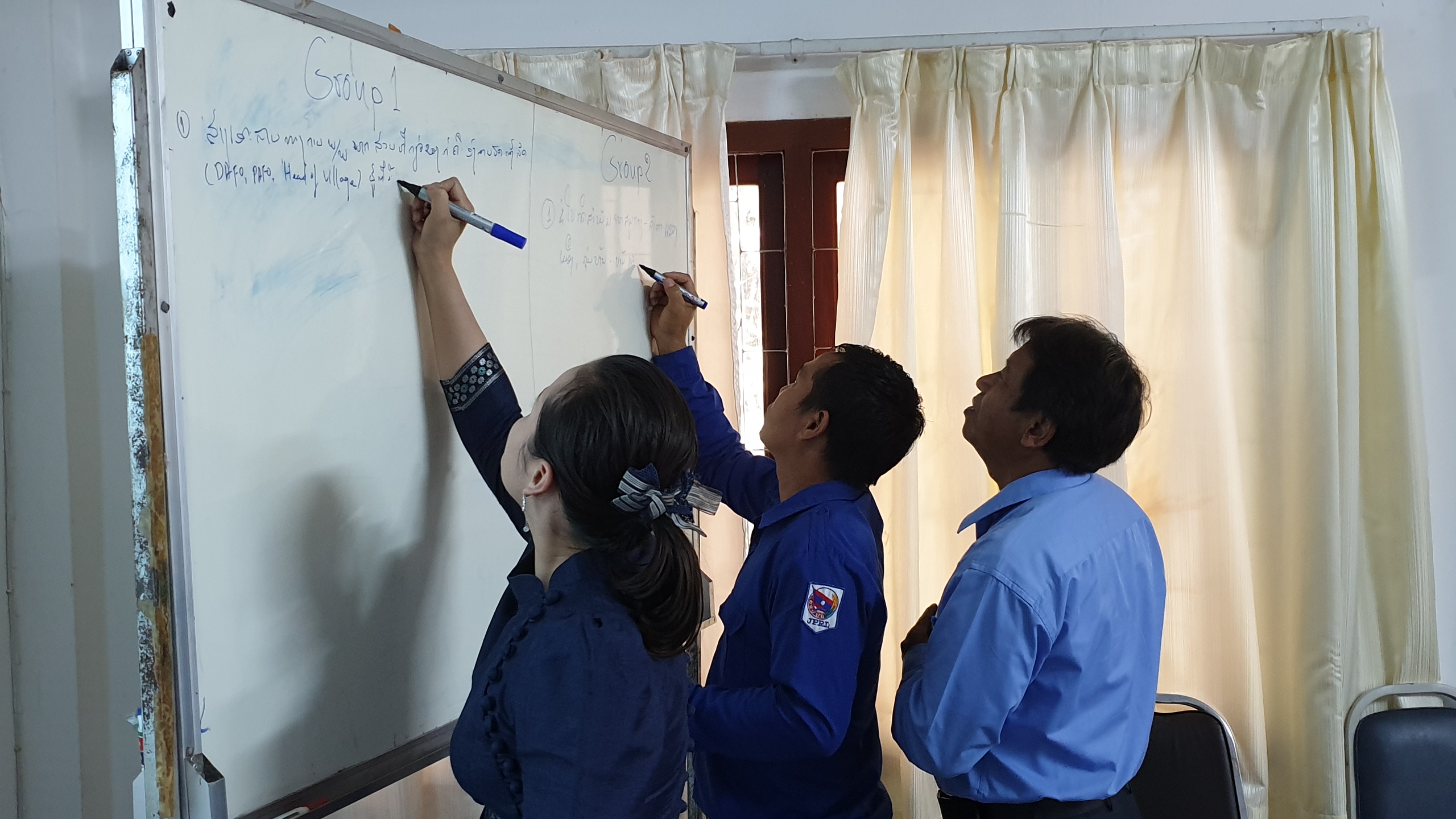
Two training-of-trainers workshops on marketing tree seed and seedlings were organised in November 2019 to support development of approaches and strategies for income generation from selling and planting of Dalbergia species. The workshops were held at the National Agriculture and Forestry Research Institute (NAFRI), in Vientiane, Lao PDR, and at the Institute of Forest and Wildlife Research and Development (IFWRD), Phnom Penh, Cambodia. Follow-up trainings with local community members were subsequently organised by IFWRD and NAFRI staff at the project sites in January and February 2020.
Download report from training-of-trainers workshop
Download report of the community trainings
Trainings on in situ and ex situ conservation
Forest trees are long-lived species with high genetic diversity that is crucial for their survival, regeneration and adaptation. Genetic diversity also provides the foundation for selection and breeding programmes to improve the productivity, resistance or quality of trees and their products. However, forest managers and conservationists often lack good information about the relevance of genetic aspects to meeting their objectives. This knowledge gap constrains conservation of tree species, increases genetic risks in subsequent generations and limits adaptation to climate change.
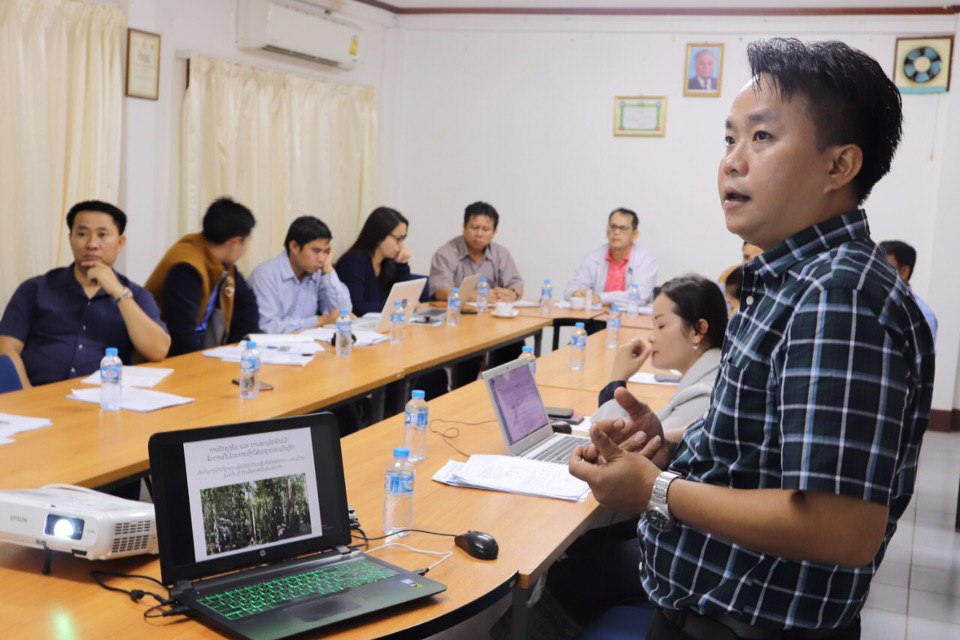
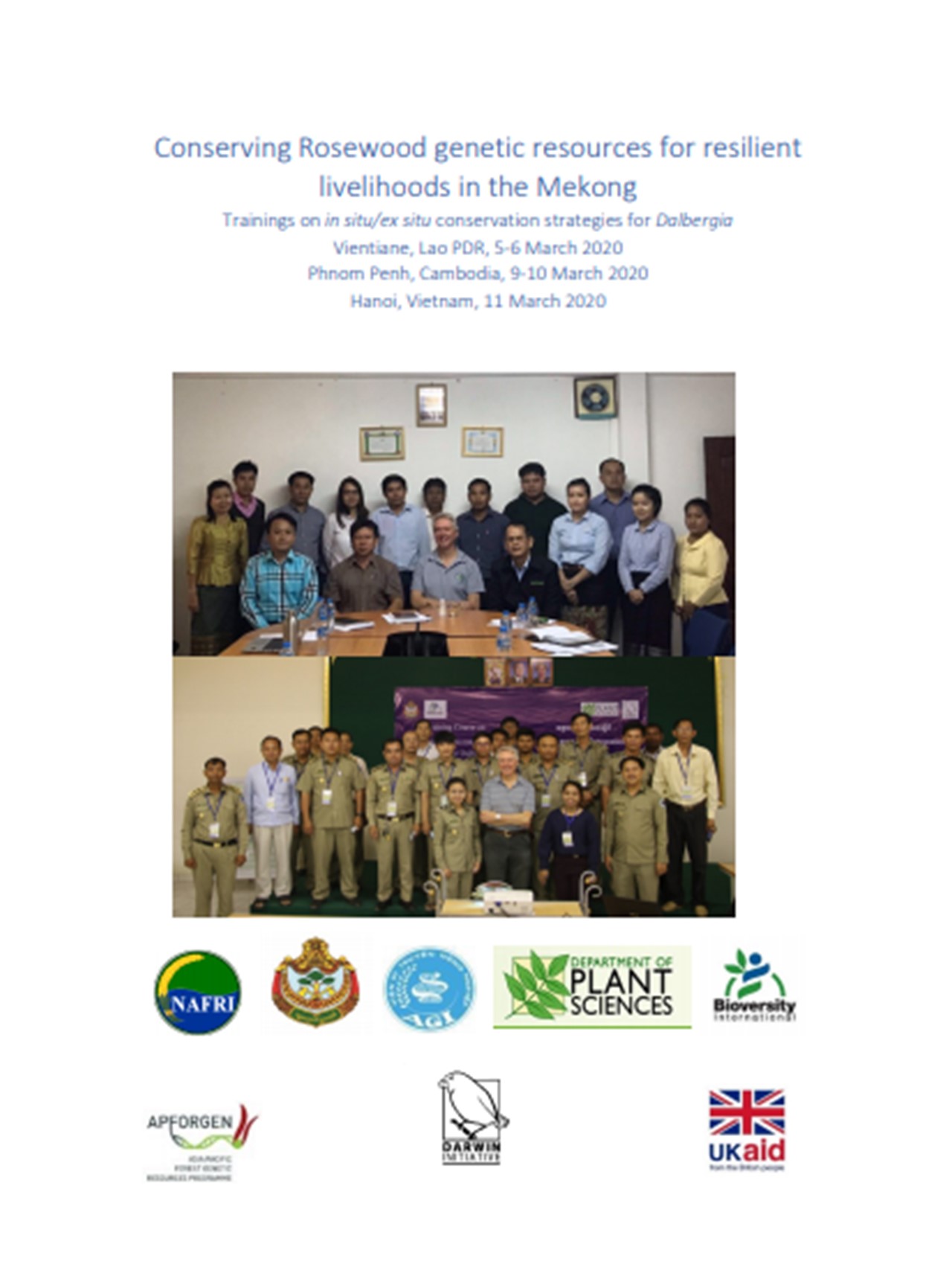
Three national trainings on in situ and ex situ conservation strategies were organised in March 2020, in collaboration with the National Agriculture and Forestry Research Institute, Lao PDR, Institute of Forest & Wildlife Research & Development, Phnom Penh, Cambodia, and Center for Biodiversity & Biosafety, Institute of Agricultural Genetics, Vietnam Academy of Agricultural Sciences, Vietnam. The trainings covered the following topics:
- basic population genetic principles in terms of how they influence conservation decisions
- options and limitations of different strategies for tree conservation (in situ, ex situ, circa situm)
- conservation of tree genetic resources through tree improvement
- case study group work on conservation of an endangered species
- review of the status of Dalbergia spp in SE Asia
- application of course learning to derive options for Dalbergia spp
Project Inception Workshop
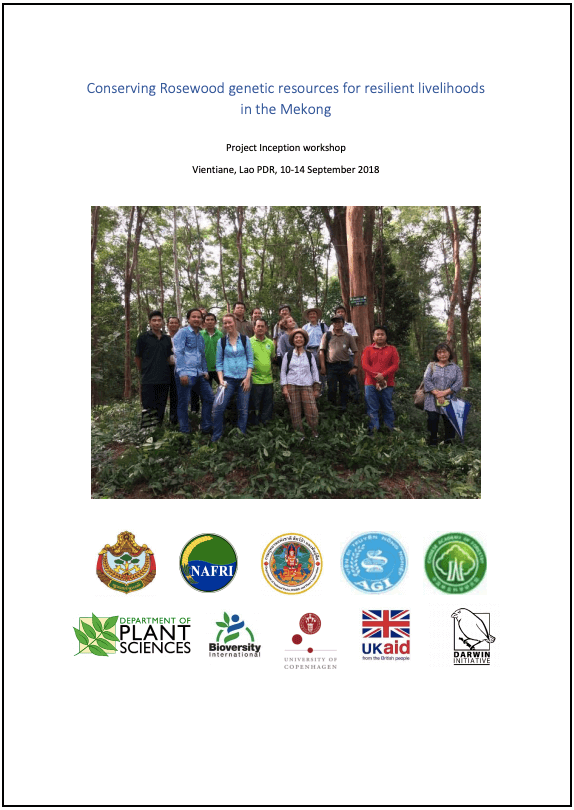
The project inception workshop was held in Vientiane, Lao PDR, from the 10th to the 14th of September, 2018. The overall aim of the Inception workshop was to ensure the project make a successful start, putting in place plans to fulfil its activities by the end of year one. Specifically, the workshop had the following five objectives, with assignment and clarification of roles among partners:
- Discuss and agree plans to carry out activities to ensure project outputs
- Develop a detailed work plan for the first year of the project
- Develop trust and working relationship between partners
- Explore/clarify collaborations with other Dalbergia genetic resources projects and more broadly conservation/ management/ restoration projects and programmes in the countries, to link and contribute to other ongoing initiatives to ensure complementarity and mutual benefits
- Clarify accounting/reporting procedures and timelines according to Darwin requirements
About us
APFORGEN is a regional programme and network with a holistic approach to the conservation and management of the Forest Genetic Resources (FGR) in the Asia-Pacific region

Useful Links
OUR CONTACTS
APFORGEN Secretariat
c/o WorldFish Headquarters (Malaysia)
Jalan Batu Maung, Batu Maung,
11960, Bayan Lepas
Penang, Malaysia